Domains and SSL certificates get most of the attention because they fail loudly. Website maintenance is different — it's a set of recurring, less dramatic tasks that quietly determine whether a client site stays fast, secure, and functional over time. Skipping them doesn't cause an immediate outage, but the cost shows up eventually.
What "Maintenance" Actually Covers
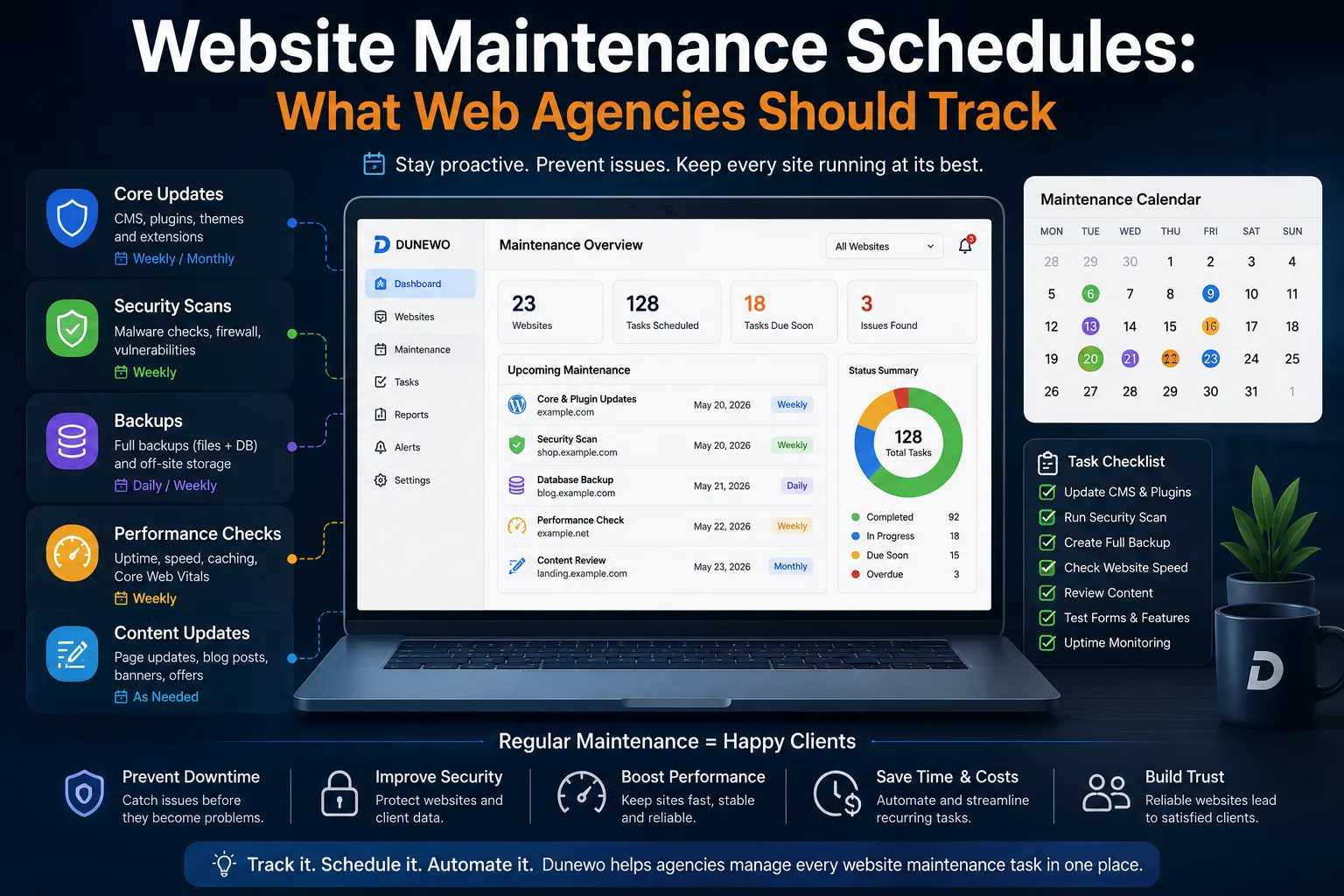
- CMS core updates (WordPress, MODX, and similar platforms)
- Plugin and theme updates
- Database cleanup and optimization
- Backup verification (not just that backups run, but that they actually restore)
- Broken link and 404 checks
- Performance and page-speed reviews
- Security scans
Why Maintenance Tasks Get Skipped
Unlike a domain with a hard expiry date, maintenance tasks don't have an obvious deadline — which is exactly why they're easy to deprioritize during a busy week. There's no browser warning for "this site hasn't had a plugin update in four months." The consequences (a security breach, a slow site losing rankings, a broken feature nobody noticed) show up much later, disconnected from the missed task that caused them.
Turning Maintenance Into a Trackable Deadline
The fix is treating maintenance the same way agencies treat domain or SSL renewals — as a recurring deadline with an owner and a reminder, not an open-ended "should probably get to this."
- Define a maintenance cadence per client — monthly, quarterly, or whatever the retainer specifies.
- Log the date of the last maintenance pass, not just that maintenance happens "regularly."
- Set a reminder for the next scheduled check-in, the same way you would for a renewal.
- Track it per client, alongside their domains, hosting and licenses — maintenance is part of the same relationship, not a separate system.
Why This Builds Client Trust
Clients rarely notice good maintenance directly — they notice its absence, usually as a slow site or a security incident. Agencies that can point to a documented maintenance schedule have a much easier time justifying retainer fees, and a much easier time catching issues before the client does.
Keeping It in One Place
Custom deadlines like maintenance check-ins don't have to live in a separate system from domains and SSL certificates. Duvento supports custom deadlines alongside domains, hosting, SSL and licenses, so a client's full renewal and maintenance calendar lives in one dashboard instead of being split across tools.
The Bottom Line
Maintenance doesn't fail the way a domain does — with a hard cutoff and an obvious warning. That makes it easier to neglect, and more important to schedule deliberately rather than leave to good intentions.